
Fox Harb’r Resort, Nova Scotia
What began as a handful of experiments has become a powerful and imaginative renaissance: public, oceanside, links-style golf resorts that strive not to conquer the coast but to interpret it.
For decades, the purest form of golf was believed to live an ocean away — in the gorse-lined dunes of Scotland, England, and Ireland, where the wind sculpts every shot, and the land refuses to bend to a designer’s whims. But over the last thirty years, a new movement has taken hold on this side of the Atlantic. At first, it was only a few visionaries — architects, players, dreamers, and proprietors — who sought to replicate the unfiltered, coastal magic of traditional links. They traveled the edges of North America, studying shorelines, scanning dune systems, and imagining how the Old World’s timeless style might find a new voice in the New World.
What began as a handful of experiments has become a powerful and imaginative renaissance: public, oceanside, links-style golf resorts that strive not to conquer the coast but to interpret it. Today, North America’s greatest modern golf destinations owe as much to the lessons of St. Andrews, Royal County Down and Royal Dornoch as they do to the wild coastlines of Oregon and Nova Scotia. They represent the continent’s answer to the British Isles’ seaside links — not replicas, but respectful evolutions.
It was Mike Keiser who proved the idea could succeed. Long before his name became synonymous with bucket-list golf, he was an avid player and unlikely developer, a greeting-card entrepreneur who believed America deserved a true links experience. On a rugged, remote stretch of Oregon coastline, Keiser and architect David McLay Kidd carved the first holes of what would become Bandon Dunes. From the outset, Bandon rejected the manicured predictability that had defined so many American resort courses. Instead, Keiser and his architects embraced the philosophy of “finding” golf holes rather than manufacturing them.
At Bandon, the turf was left firm and fescue-dominated, the wind was treated as an essential hazard, and the dunes became the course’s signature anatomy. Kidd’s work, soon complemented by Tom Doak’s Pacific Dunes and later by Bill Coore and Ben Crenshaw’s Bandon Trails, established a design vocabulary rooted in restraint. Their courses looked and played as if they had been discovered rather than built — rugged, ancient, and reverent to the spirit of links golf. Bandon Dunes didn’t just succeed; it changed expectations. It proved that passionate golfers would travel great distances for an authentic, minimalist, truly coastal experience.
On the opposite coast, Nova Scotia answered the call with its own powerful interpretation. Cabot Links arrived first, a major undertaking and visionary project by Canadian architect Rod Whitman who sculpted a pure links routing directly along the windswept shoreline of Cape Breton Island. A few years later, Coore and Crenshaw added Cabot Cliffs, a dramatic, cliff-top epic that redefined what ocean golf could look like. With blind carries, elevated tee shots, fairways that snaked through native grasses, and greens balanced above the surf, the Cabot courses quickly ascended into global acclaim.
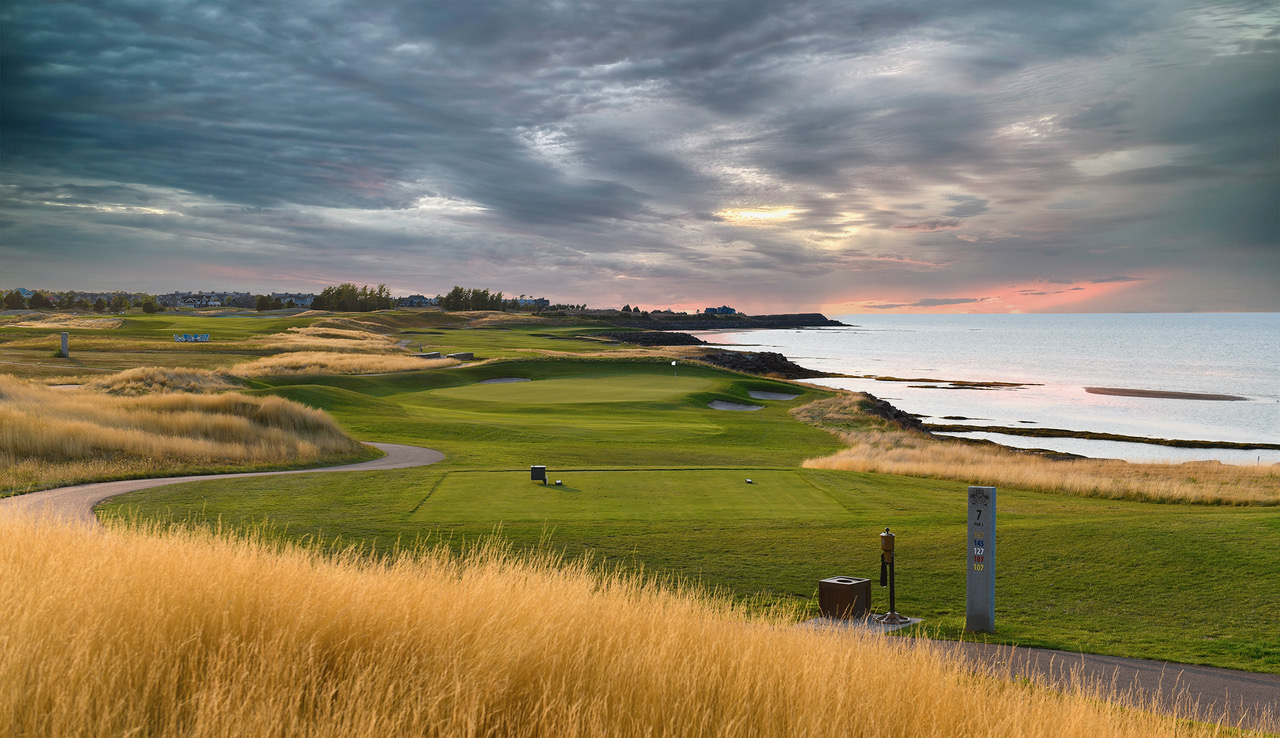
More importantly, they showed the world that Canada possessed not only the terrain but the cultural and climatic authenticity to join the ranks of international links destinations. The Cabot phenomenon — the combination of design purity, firm ground, Atlantic winds, and maritime charm — changed how the global golf community viewed Nova Scotia. A new pilgrimage route had been established.
Today, a fresh wave of imagination is reshaping one of Nova Scotia’s most storied luxury properties, Fox Harb’r Resort. Already regarded as one of Canada’s premier golf getaways, Fox Harb’r has embarked on a bold redesign to elevate the resort to the next great chapter of North American links golf. The goal is not simply to offer ocean views — plenty of courses do that — but to create an authentic links narrative woven directly into the coastline.
To accomplish this, Fox Harb’r engaged two of Canada’s most celebrated architects, Tom McBroom and Doug Carrick. Their task: to reimagine the resort’s ocean routing and design a genuine link’s seaside spirit along the coast of the Northumberland Strait.
“The style will be quite different,” Carrick explains. “Picture rough and tumbling, natural-looking, oceanside terrain.” This isn’t about planting dunes or staging drama artificially; it’s about respecting the site’s inherent beauty and re-exposing the raw textures that once defined coastal golf.
McBroom adds, “We’re adding smaller-scale pot bunkers, grass hollows, and more grass-face usage. We want to feature the rumbles and rolls of the land. We want green contours that leverage the existing topography. We’re taking a wild and windswept look and making it a little more refined, a little more elegant.”
At the heart of the redesign is a commitment to orienting holes perpendicular to the ocean rather than merely parallel to it. This creates strategy, not just scenery. The Strait becomes an active participant in the round as crosswinds are always a factor.
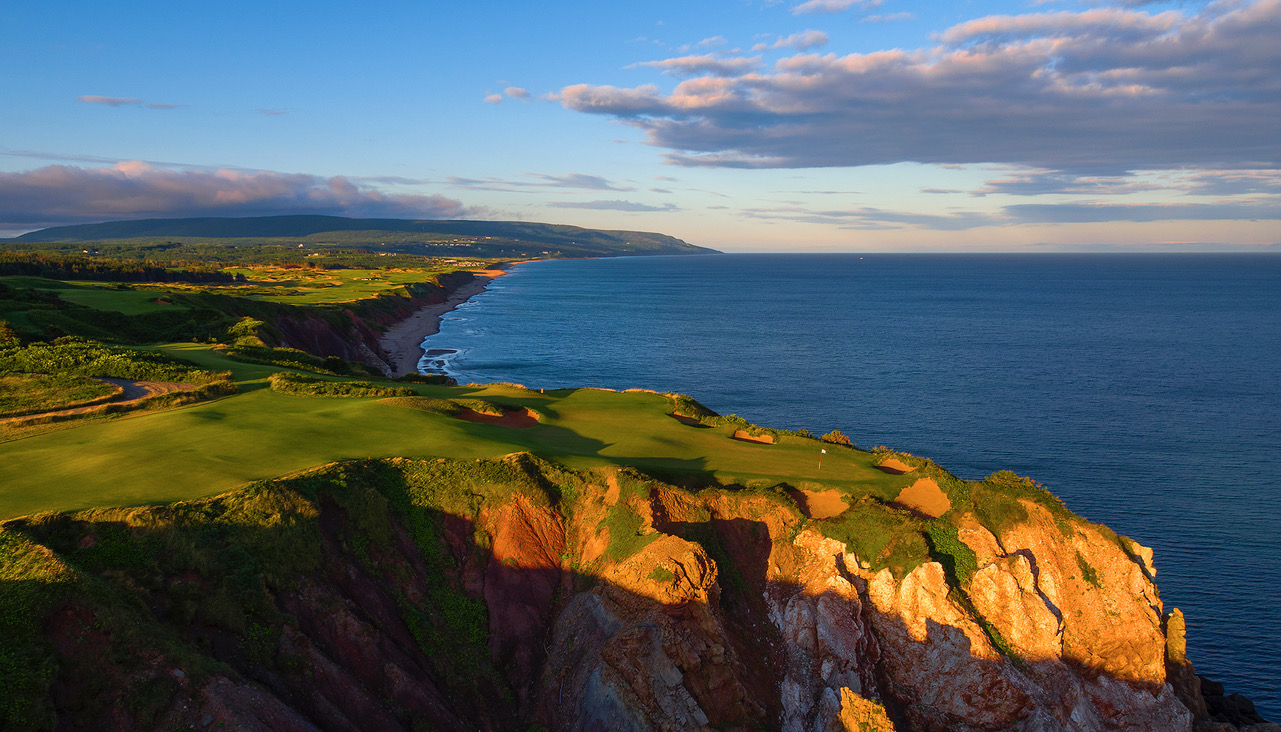
Photo by Bob Huxtable/Hux.net
One of the new holes will require players to carry their approach shot over the sea to reach a small, elevated green, rivalling some of the world’s most iconic coastal golf holes. The views are being enhanced, corridors are being widened, and natural landforms are being re-exposed. When completed in 2027, the new Ocean Course will add a memorable option to the links courses in North America.
If comparisons are necessary, McBroom encourages golfers to think of classics like Royal Birkdale or Royal St. George’s — venues where winds, dunes, and contours dominate the experience. “Is that a tall order?” he asks. “Perhaps. But we’re setting out to make another landmark golf course in Canada.” Early previews suggest they are well on their way.
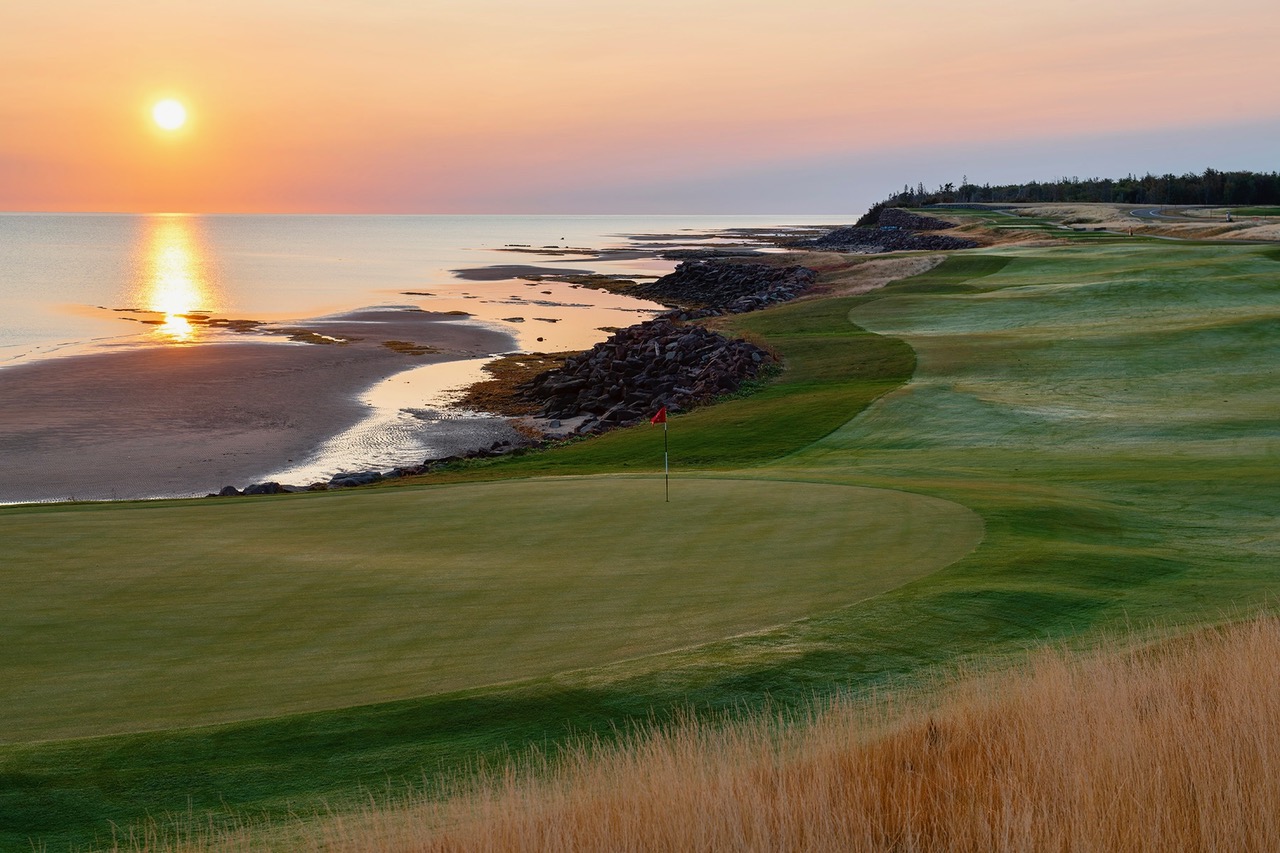
Photo by Bob Huxtable/Hux.net
Named Golf Digest’s “Best New Course” upon its original debut and ranked annually by SCOREGolf as one of Canada’s top courses, the Fox Harb’r Resort’s golf course has steadily built a reputation for excellence. But the new Ocean Course marks a turning point — a moment where Fox Harb’r has fully embraced the coastal geography and becomes a member of the must-play links courses of North America.
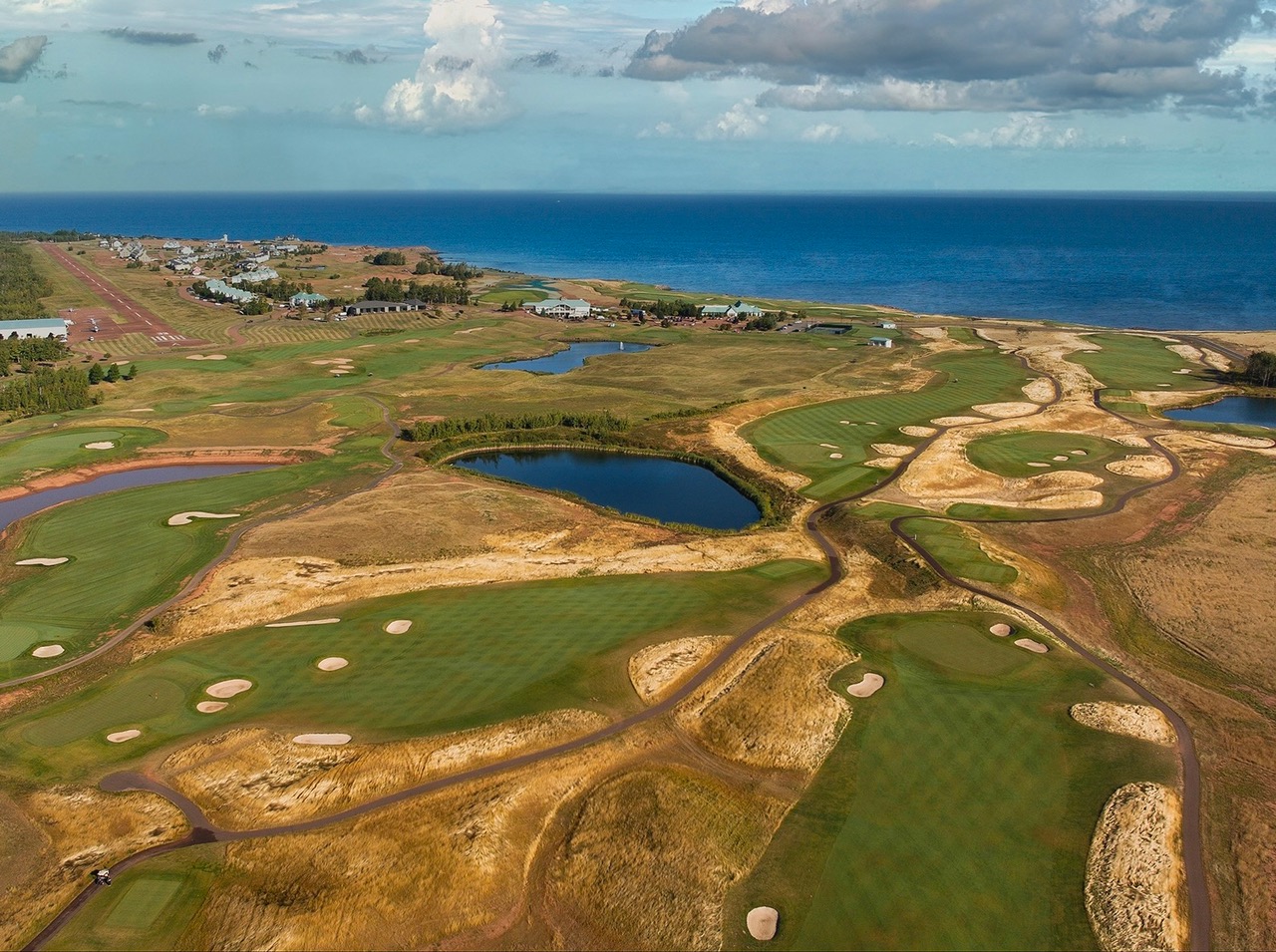
What connects Fox Harb’r to Bandon, Cabot, and the broader community of contemporary North American links is a unified design philosophy: let the land guide the way. Fairways should be firm and fast, allowing the wind to act as both a challenger and an ally. Bunkers should be used thoughtfully and sparingly, and the natural landscape’s inherent textures should be embraced. Above all, the goal is to cultivate a golfing experience that rewards strategy and creativity over mere power.
In addition to exceptional golf, Fox Harb’r is one of Canada’s most comprehensive coastal retreats. The resort offers a spa, a conference center, and coastal walking trails, as well as a casual dining area and the Cape Cliff Dining Room. Here, sommeliers are eager to share details about the award-winning wine list, which features over 540 selections. Guests can enjoy fresh, local cuisine that ranges from Nova Scotian seafood to farm-inspired dishes, including offerings from the resort’s own award-winning vineyards. The resort also boasts a private runway and marina, making Fox Harb’r a truly unique getaway among coastal maritime destinations.
Nova Scotia has secured its place on the global golf map by combining essential qualities with a unique cultural charm. The region offers not only breathtaking coastal golf courses but also warm hospitality, lobster shacks, coastal inns, whiskey bars, and resort kitchens that highlight local craftsmanship.
For American travelers, Nova Scotia is surprisingly accessible — just under a two-hour flight from New York City — and with very favorable exchange rates, Canadian golf offers exceptional value, and Fox Harb’r Resort offers so much more.